
Main Line: 479.443.2705
Fax Line: 479.443.2718
Email: info@rmp.law
Bentonville – 479-553-9800
Jonesboro – 870-394-5200
Little Rock – 501-954-9000
Main Line: 479.443.2705
Fax Line: 479.443.2718
Email: info@rmp.law
Bentonville – 479-553-9800
Jonesboro – 870-394-5200
Little Rock – 501-954-9000

The U.S. Department of Labor (DOL) has proposed a single joint‑employer analysis
for the Fair Labor Standards Act (FLSA) (minimum wage and overtime) to align the Family and
Medical Leave Act (FMLA) and the Migrant and Seasonal Agricultural Worker Protection Act
(MSPA). This would replace today’s patchwork and apply one framework across pay, leave, and
MSPA claims. The change would matter most for franchising, staffing/professional employer
organizations (PEOs), vendor‑managed services, agriculture, and multi‑entity groups. What
follows explains the proposal, practical differences from current law, and immediate steps for
employers.
On Tuesday, the Federal Trade Commission issued a new Rule putting an end to employment-related non-compete clauses. In its justification for the rule, the FTC called non-compete clauses “an unfair method of competition” and stated it is a “violation for [employers] to… enter into non-compete clauses (“non-competes”) with workers.” In today’s very competitive labor market, the new FTC Rule creates a significant disruption for employers.
This new FTC provision—set to take effect in 120 days—renders existing non-compete agreements unenforceable. Existing non-compete agreements with senior executives will remain enforceable, although employers cannot require newly hired senior executives to sign such an agreement.
After the Rule takes effect, employers are required to deliver personal notice to employees (past and present) who signed a non-compete agreement informing them agreements are no longer enforceable. In the notice, employers must inform employees they are free to accept any job or start any business, even if it is directly competitive with the employer.
Compliance with the FTC Rule is not optional. Employers should consider new ways they can protect against a former employee gaining a competitive advantage by using the employer- provided training, the relationships made possible by the employer, or the confidential information learned from the employer. RMP can assist you in navigating this disruption and can provide advice on how to most effectively protect your vital business interests going forward.

RMP Attorneys At Law has an experienced Employment Law Attorney team dedicated to helping you navigate these changes. If you have any questions or would like guidance, reach out to one of our employment attorneys, Tim Hutchinson, Seth Haines, Larry McCredy, or Taylor Baltz or call 479.443.2705.
The U.S. Department of Labor (DOL) has proposed a single joint‑employer analysis
for the Fair Labor Standards Act (FLSA) (minimum wage and overtime) to align the Family and
Medical Leave Act (FMLA) and the Migrant and Seasonal Agricultural Worker Protection Act
(MSPA). This would replace today’s patchwork and apply one framework across pay, leave, and
MSPA claims. The change would matter most for franchising, staffing/professional employer
organizations (PEOs), vendor‑managed services, agriculture, and multi‑entity groups. What
follows explains the proposal, practical differences from current law, and immediate steps for
employers.
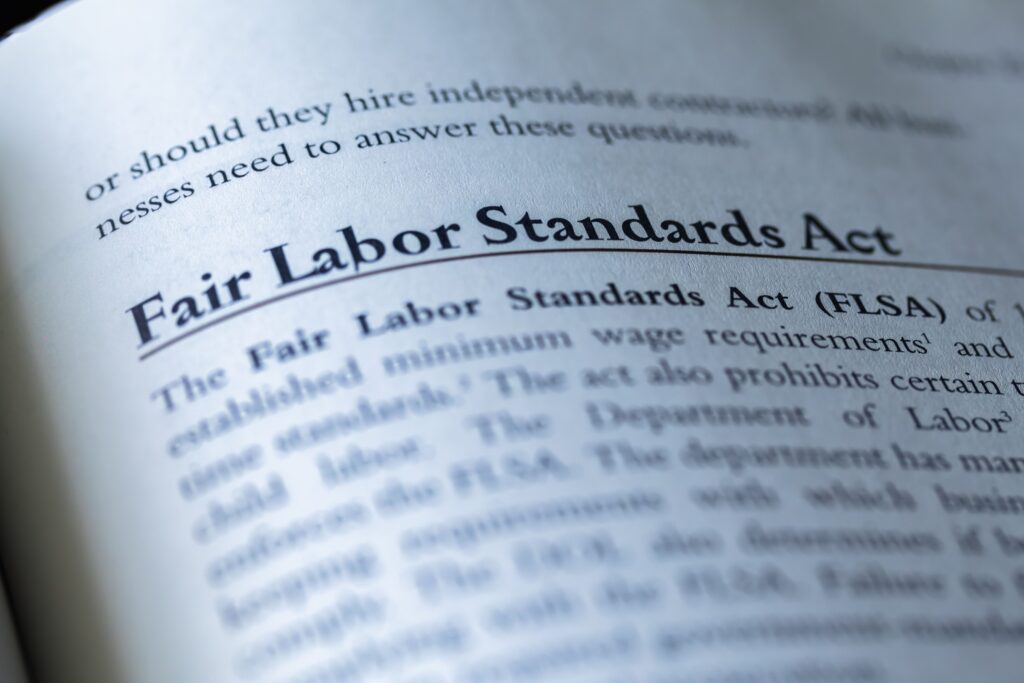
The proposed rule would:
(1) restore an FLSA joint‑employer rule in 29 C.F.R. part 791;
(2) align FMLA joint‑employment (29 C.F.R. § 825.106) with that analysis; and
(3) align MSPA provisions (29 C.F.R. §§ 500.20, 500.70) as well.
DOL’s goal is a single, consistent framework across statutes that use similar employment definitions.
DOL also signaled that a business model or compliance clause—by itself—neither establishes nor defeats joint‑employer status. Franchise relationships, brand/supply‑chain arrangements, or contracts requiring legal compliance are not determinative without evidence of day‑to‑day control.
Since 2021 there is no FLSA joint‑employer regulation, and courts apply differing circuit tests.
Under the FLSA, courts use circuit‑specific case law. Some apply broad “economic reality”
factors; others emphasize control. Outcomes vary by forum.
FMLA has its own joint‑employment rule (designating a “primary employer”), and MSPA
incorporates a broad concept of “employ.” Neither mirrors a unified FLSA test.
The proposal would replace this fragmentation with one analysis for pay, leave, and MSPA
claims. That should simplify compliance planning across jurisdictions. Whether exposure
expands or contracts for any employer will depend on its facts—especially who hires/fires, sets
pay and schedules, supervises work, and keeps records.
The proposed rule change does not change current obligations. The DOL must first consider
comments, issue a final rule, and set an effective date. Until then, FMLA/MSPA rules remain in
force and FLSA joint‑employer issues are governed by circuit case law. Do not change
programs based on the proposal.
Even if finalized, do not treat the rule as settled law. In 2024, Loper Bright overruled Chevron;
courts will give no automatic deference and may narrow, reinterpret, or vacate any final rule.
Litigation (and possibly different outcomes by circuit) is likely. Keep structuring relationships
under current statutes and binding precedent.
No. A franchise relationship alone does not make a franchisor a joint employer. The focus
remains on actual control over workers. Hands‑on involvement—e.g., setting individual
schedules, directing daily work, or making hire/fire decisions—raises risk under any test.
Yes, and that alone should not determine joint‑employer status. It is not a safe harbor. Courts
will still look at the total relationship. Ensure field operations and communications do not cross
into day‑to‑day control.
Both may be joint employers if the facts show shared control. Key drivers include who sets hours
and duties, supervises daily work, disciplines, and controls conditions. Align service agreements
with actual practice.
That is classic co‑employment. Both entities may be joint employers. Document who controls
hiring/termination, compensation, discipline, and schedules, and reflect that split in the PEO
agreement.
Yes, if they direct tasks, set schedules, supervise daily work, or can remove individuals.
Managing the contract (standards, audits) is different from managing workers. Calibrate vendor
contracts and day‑to‑day practices accordingly.
Not by themselves. Risk grows if the company trains, supervises, or disciplines vendor
employees directly. Require the vendor to implement and enforce standards with its own
workforce.
MSPA already creates broad joint‑employer exposure. The proposal would align MSPA with
the FLSA test, but growers still face risk where they exercise operational control. Contracts with
FLCs should clearly allocate hiring, supervision, transportation, housing, pay, and
record keeping—and on‑the‑ground practices must match.
Not by themselves. They are one factor. Greater risk arises when the grower controls schedules,
tools, hire/fire authority, or the manner of work. Leaving day‑to‑day management to the FLC
reduces risk.
The proposal addresses joint employment, not IC status. If subcontractor workers are employees,
joint‑employer exposure turns on your control over their work. Evaluate classification first, then
your operational control.
Yes. Directing daily tasks and schedules is strong evidence of joint employment under any
framework. Either shift day‑to‑day supervision to the agency or ensure your wage‑hour,
FMLA, and record keeping practices reflect potential joint‑employer status.
This Update is provided for informational purposes only and does not constitute legal advice.
The DOL’s proposal is subject to change through the notice-and-comment process, and any final
rule will be subject to judicial review under the post-Loper Bright framework. Employers should
consult counsel to evaluate the specific implications for their operations.
If your company works with staffing agencies, subcontractors, franchisees, or labor contractors, our attorneys can help you evaluate your current practices and prepare for possible regulatory changes. To speak with an Arkansas employment attorney, contact RMP Law at 479-443-2705 or use our Message Us form.

Main RMP Number: 479-443-2705
Bentonville – 479-553-9800
Jonesboro – 870-394-5200
Little Rock – 501-954-9000

DISCLAIMER: The information provided on this website does not constitute legal advice. Instead, all information, content, and materials available on this site are for general informational purposes. Information on this website may not constitute the most up-to-date legal or other information. Readers of this website should contact their attorney to obtain advice with respect to any particular legal matter.
The U.S. Department of Labor (DOL) has proposed a single joint‑employer analysis
for the Fair Labor Standards Act (FLSA) (minimum wage and overtime) to align the Family and
Medical Leave Act (FMLA) and the Migrant and Seasonal Agricultural Worker Protection Act
(MSPA). This would replace today’s patchwork and apply one framework across pay, leave, and
MSPA claims. The change would matter most for franchising, staffing/professional employer
organizations (PEOs), vendor‑managed services, agriculture, and multi‑entity groups. What
follows explains the proposal, practical differences from current law, and immediate steps for
employers.
The proposed rule would:
(1) restore an FLSA joint‑employer rule in 29 C.F.R. part 791;
(2) align FMLA joint‑employment (29 C.F.R. § 825.106) with that analysis; and
(3) align MSPA provisions (29 C.F.R. §§ 500.20, 500.70) as well.
DOL’s goal is a single, consistent framework across statutes that use similar employment definitions.
DOL also signaled that a business model or compliance clause—by itself—neither establishes nor defeats joint‑employer status. Franchise relationships, brand/supply‑chain arrangements, or contracts requiring legal compliance are not determinative without evidence of day‑to‑day control.
Since 2021 there is no FLSA joint‑employer regulation, and courts apply differing circuit tests.
Under the FLSA, courts use circuit‑specific case law. Some apply broad “economic reality”
factors; others emphasize control. Outcomes vary by forum.
FMLA has its own joint‑employment rule (designating a “primary employer”), and MSPA
incorporates a broad concept of “employ.” Neither mirrors a unified FLSA test.
The proposal would replace this fragmentation with one analysis for pay, leave, and MSPA
claims. That should simplify compliance planning across jurisdictions. Whether exposure
expands or contracts for any employer will depend on its facts—especially who hires/fires, sets
pay and schedules, supervises work, and keeps records.
The proposed rule change does not change current obligations. The DOL must first consider
comments, issue a final rule, and set an effective date. Until then, FMLA/MSPA rules remain in
force and FLSA joint‑employer issues are governed by circuit case law. Do not change
programs based on the proposal.
Even if finalized, do not treat the rule as settled law. In 2024, Loper Bright overruled Chevron;
courts will give no automatic deference and may narrow, reinterpret, or vacate any final rule.
Litigation (and possibly different outcomes by circuit) is likely. Keep structuring relationships
under current statutes and binding precedent.
No. A franchise relationship alone does not make a franchisor a joint employer. The focus
remains on actual control over workers. Hands‑on involvement—e.g., setting individual
schedules, directing daily work, or making hire/fire decisions—raises risk under any test.
Yes, and that alone should not determine joint‑employer status. It is not a safe harbor. Courts
will still look at the total relationship. Ensure field operations and communications do not cross
into day‑to‑day control.
Both may be joint employers if the facts show shared control. Key drivers include who sets hours
and duties, supervises daily work, disciplines, and controls conditions. Align service agreements
with actual practice.
That is classic co‑employment. Both entities may be joint employers. Document who controls
hiring/termination, compensation, discipline, and schedules, and reflect that split in the PEO
agreement.
Yes, if they direct tasks, set schedules, supervise daily work, or can remove individuals.
Managing the contract (standards, audits) is different from managing workers. Calibrate vendor
contracts and day‑to‑day practices accordingly.
Not by themselves. Risk grows if the company trains, supervises, or disciplines vendor
employees directly. Require the vendor to implement and enforce standards with its own
workforce.
MSPA already creates broad joint‑employer exposure. The proposal would align MSPA with
the FLSA test, but growers still face risk where they exercise operational control. Contracts with
FLCs should clearly allocate hiring, supervision, transportation, housing, pay, and
record keeping—and on‑the‑ground practices must match.
Not by themselves. They are one factor. Greater risk arises when the grower controls schedules,
tools, hire/fire authority, or the manner of work. Leaving day‑to‑day management to the FLC
reduces risk.
The proposal addresses joint employment, not IC status. If subcontractor workers are employees,
joint‑employer exposure turns on your control over their work. Evaluate classification first, then
your operational control.
Yes. Directing daily tasks and schedules is strong evidence of joint employment under any
framework. Either shift day‑to‑day supervision to the agency or ensure your wage‑hour,
FMLA, and record keeping practices reflect potential joint‑employer status.
This Update is provided for informational purposes only and does not constitute legal advice.
The DOL’s proposal is subject to change through the notice-and-comment process, and any final
rule will be subject to judicial review under the post-Loper Bright framework. Employers should
consult counsel to evaluate the specific implications for their operations.
If your company works with staffing agencies, subcontractors, franchisees, or labor contractors, our attorneys can help you evaluate your current practices and prepare for possible regulatory changes. To speak with an Arkansas employment attorney, contact RMP Law at 479-443-2705 or use our Message Us form.
Main RMP Number: 479-443-2705
Bentonville – 479-553-9800
Jonesboro – 870-394-5200
Little Rock – 501-954-9000
DISCLAIMER: The information provided on this website does not constitute legal advice. Instead, all information, content, and materials available on this site are for general informational purposes. Information on this website may not constitute the most up-to-date legal or other information. Readers of this website should contact their attorney to obtain advice with respect to any particular legal matter.

Main Line: 479.443.2705
Fax Line: 479.443.2718
Email: info@rmp.law
Bentonville – 479-553-9800
Jonesboro – 870-394-5200
Little Rock – 501-954-9000
JOHNSON
5519 Hackett Street, Suite 300
Springdale, AR 72762
BENTONVILLE
809 SW A Street, Suite 105
Bentonville, AR 72712
JONESBORO
710 Windover Road, Suite B
Jonesboro, AR 72401
LITTLE ROCK
17901 Chenal Parkway, Suite 200
Little Rock, AR 72223